ELASTIC NETTING
 AUTOMATION
 BONE PROTECTION
Bone Protection Packaging: Guide for Meat Processors
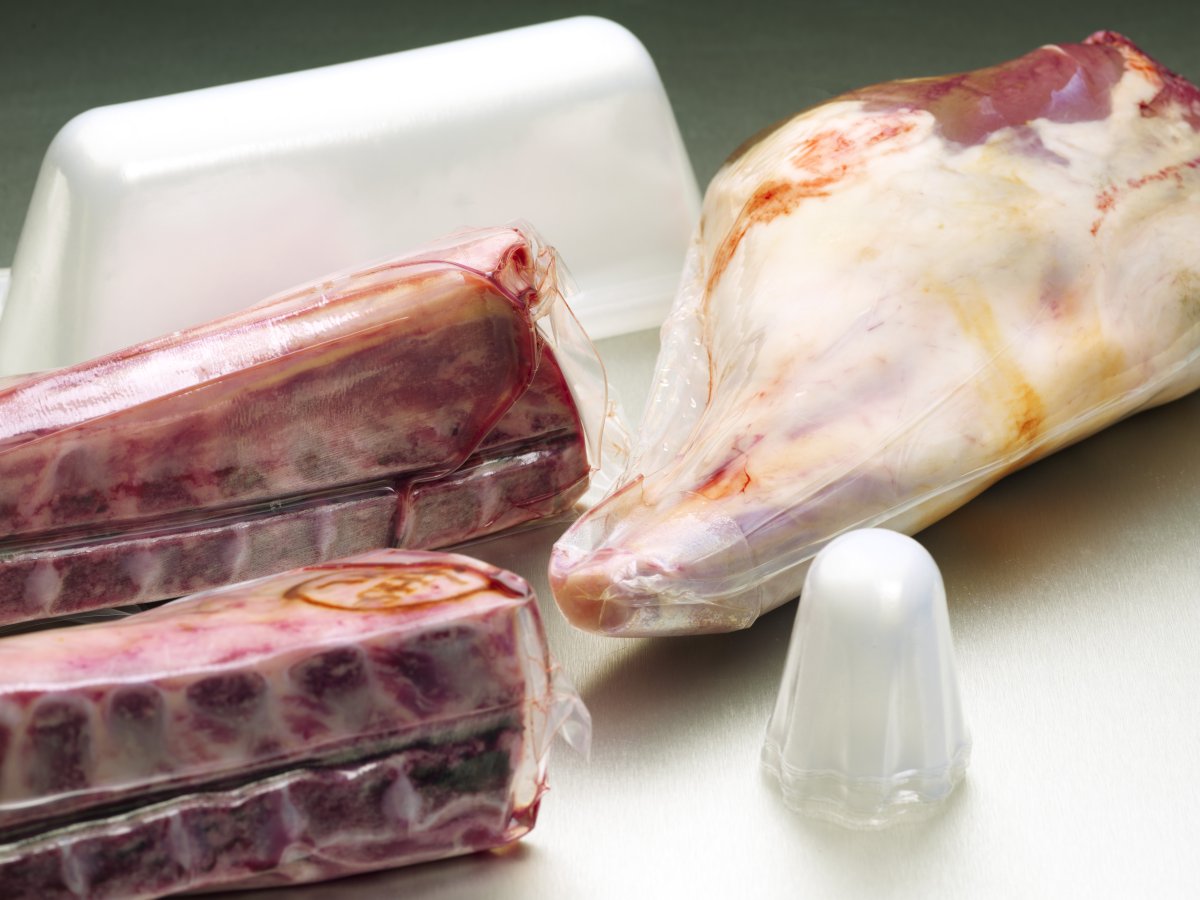
Did you know that meat processors can reduce the weight of non-recyclable packaging by over 50% while simultaneously eliminating vacuum-pack leakers with thermal-formed targeted bone-protection packaging? Conventional waxed cloth or thick shrink bags can add weight to the finished package that can be reduced, helping the environment.
Key Takeaways
- Identify how tailored thermally formed bone-protection packaging functions to eliminate vacuum-pack leaks and reduce associated product spoilage costs.
- Compare the efficiency of traditional materials with modern clear plastic solutions that reduce the weight of non-recyclable packaging by over 50%.
The Mechanics of Bone Protection in Vacuum Packaging
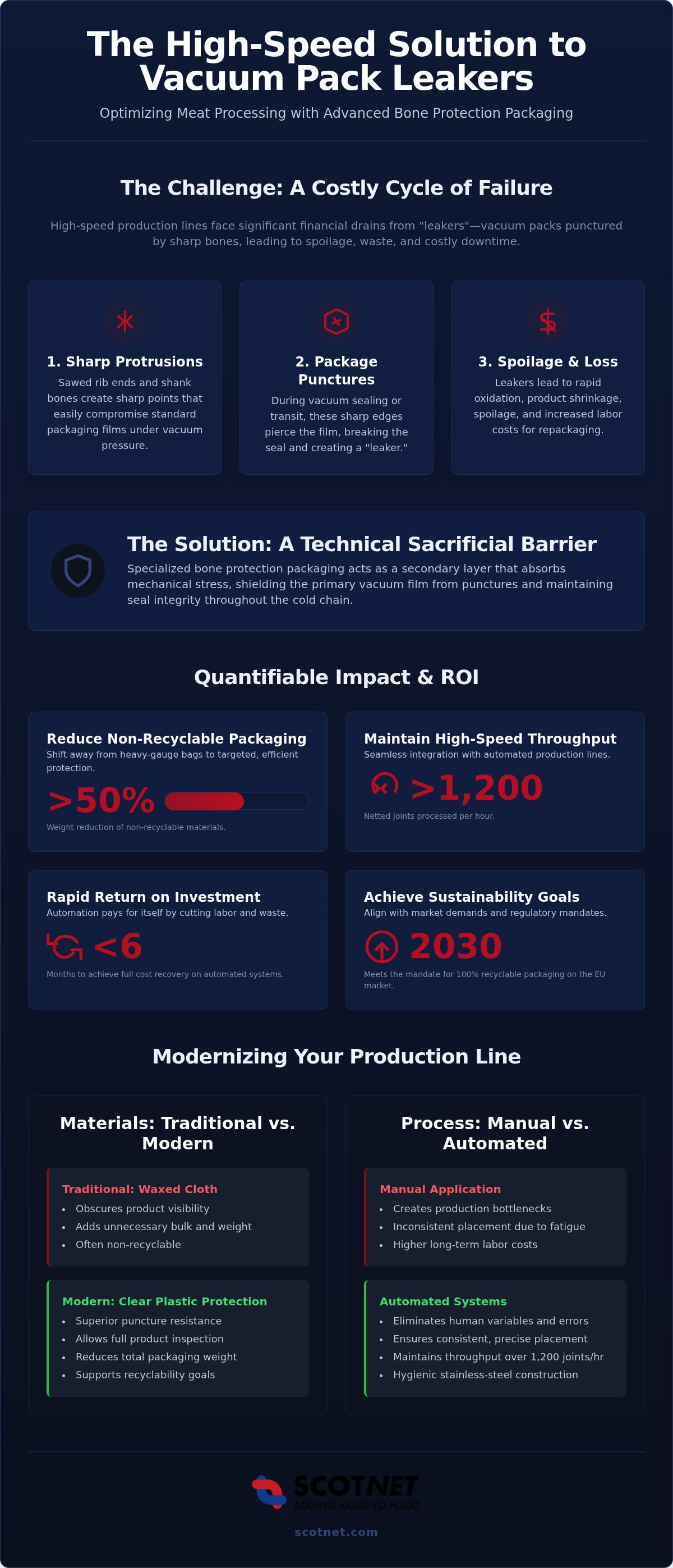
Bone protection packaging serves as a barrier between sharp protrusions and the primary vacuum film. This secondary layer absorbs mechanical stress, preventing the sharp edges of rib ends or shank bones from piercing the vacuum layer. The costs of leakers are high; for example, in the beef industry, wet ageing is achieved using vacuum packaging to enhance product quality; however, a single puncture can lead to rapid oxidation and spoilage. These "leakers" represent a significant financial drain on large-scale operations. The total cost needs to take into account many factors, not just the increased labour costs of repackaging. Punctures typically occur during the vacuum cycle, when the film contracts, or during transit, when friction occurs between stacked units.
Identifying and Categorising Vacuum Pack Puncture Risks
Standard vacuum shrink bags often fail because they lack the localised puncture resistance required. Rib ends and shank bones benefit greatly from specific protection, such as shank caps. Material thickness alone isn't always sufficient. Thermal-formed bone protection offers flexible puncture resistance without adding unnecessary bulk to the final package.
Evaluating Bone Protection Materials for Industrial Efficiency
Traditional waxed cloth materials historically served as the industry standard, yet they often obscure product visibility and introduce excessive bulk. Modern, clear, thermal-formed bone protection offers a technical alternative. It offers superior puncture resistance without compromising the retail presentation. These materials allow consumers to inspect meat quality while ensuring the vacuum seal remains intact during handling. Many options are available for specific bone-in joints; for example, gammon caps, lamb shank caps, rib caps, all designed for specific targeted protection. They all meet rigorous food-grade compliance and global manufacturing standards, and are made in our BRC AA grade approved facility.
Sustainability and the 50% Packaging Weight Reduction Standard
Technical advancements in material science now allow processors to meet aggressive sustainability targets. By implementing targeted bone-protection packaging, a facility can reduce the weight of non-recyclable packaging by over 50%. This shift away from heavy-gauge, multi-layer bags lowers the total carbon footprint of the production cycle. It also aligns with the 2030 mandate that all packaging in the EU market be recyclable.
Optimising High-Speed Packaging Lines with Bone Protection Solutions
The application of our thermal formed targeted bone protection is fast, requiring no cutting of waxed cloth, no measuring, just simply apply to the bone, and place in the shrink bag. Manual application of bone guards often creates a bottleneck. Operator ergonomics and fatigue levels fluctuate throughout a shift, leading to inconsistent placement and increased labour costs. Stainless-steel dispensers are available and can be wall-, floor-, or table-mounted.
Frequently Asked Questions
What is bone protection packaging in the meat industry?
Bone protection packaging refers to technical materials designed to act as a protective barrier between sharp bone edges and vacuum pouches. These materials are applied to primal cuts to prevent the mechanical piercing of the primary film during the vacuum cycle, maturing time, and shipment to the final point of packaging removal.
How does bone protection reduce vacuum pack leakers?
These barriers reduce leakers by absorbing the physical stress bones exert on the vacuum layer. Without protection, the film is pulled tightly against sharp protrusions, often causing localised punctures. Bone protection distributes this pressure across a wider surface area. This prevents material breaches and eliminates the high costs associated with repackaging and product wasteage in industrial operations.
Can bone protection packaging actually lower my carbon footprint?
Yes, advanced bone-protection packaging allows facilities to utilise thinner, recyclable primary films, which can reduce the weight of non-recyclable packaging by over 50%. By reducing total material volume and product waste from leaks, processors effectively lower their facility's carbon footprint. It's a strategic method for meeting the 2030 EU mandate requiring all packaging on the market to be fully recyclable.
What is the difference between bone guard cloth and plastic caps?
Traditional bone guard cloth is often waxed and provides general coverage; however, it doesn't offer the same level of transparency as modern solutions. Plastic caps are precision-engineered for specific structures, such as shanks or ribs. These caps are more durable and designed for seamless integration with automated machinery. They provide a hygienic, transparent finish that maintains the product's retail appeal without compromising protection.
Article by
Gordon Wicklow
Gordon Wicklow is Managing Director of the Scobie & Junor Group, a family-owned Scottish business that has served the food and meat-processing industry for more than a century. A graduate of the University of St Andrews, Gordon has been a director of Scobie & Junor since 1998.
He leads the Group’s work across the UK and Ireland, helping food manufacturers add value through innovative ingredients, specialist packaging, elastic meat netting and automated processing machinery. Drawing on extensive industry experience and technical knowledge, Gordon champions practical innovation, operational efficiency and close customer collaboration—from developing new flavours and formulations to improving production yields, presentation and consistency.
Under his leadership, Scobie & Junor continues to combine more than 100 years of experience with modern manufacturing, new-product development and market insight, providing food processors and butchers with solutions designed for today’s evolving consumer and production demands.