ELASTIC NETTING
 AUTOMATION
 BONE PROTECTION
Meat Processing Automation Equipment: A Guide to Industrial Efficiency
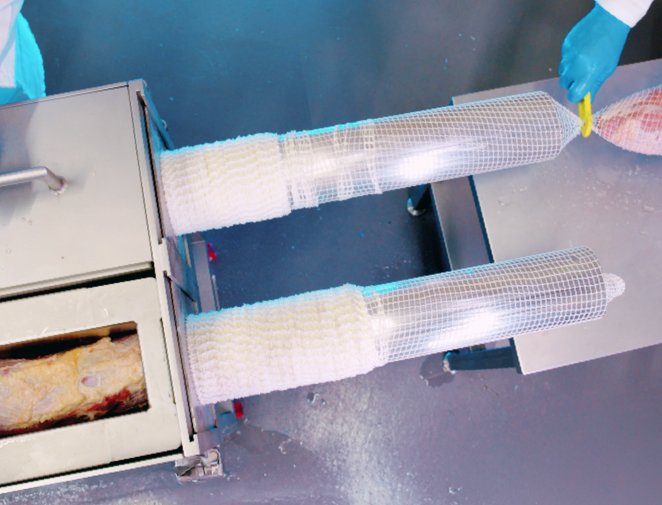
A Scotnet Automation DS1200P8 double-stuffer can deliver labour savings of £120,000 per year compared with a traditional manual line, even at outputs of 1000 joints per hour. For most processors, relying on manual labour for netting and tying is no longer viable amid rising operator costs and persistent staff shortages. This guide shows how modern meat processing automation equipment addresses these issues and delivers a full return on investment in under six months. We provide a detailed overview of high-speed stuffing systems designed to increase joints-per-hour output. You will learn how to implement automated solutions that improve product consistency, reduce maintenance downtime, and use simplified stainless-steel designs for rapid cleaning.
Key Takeaways
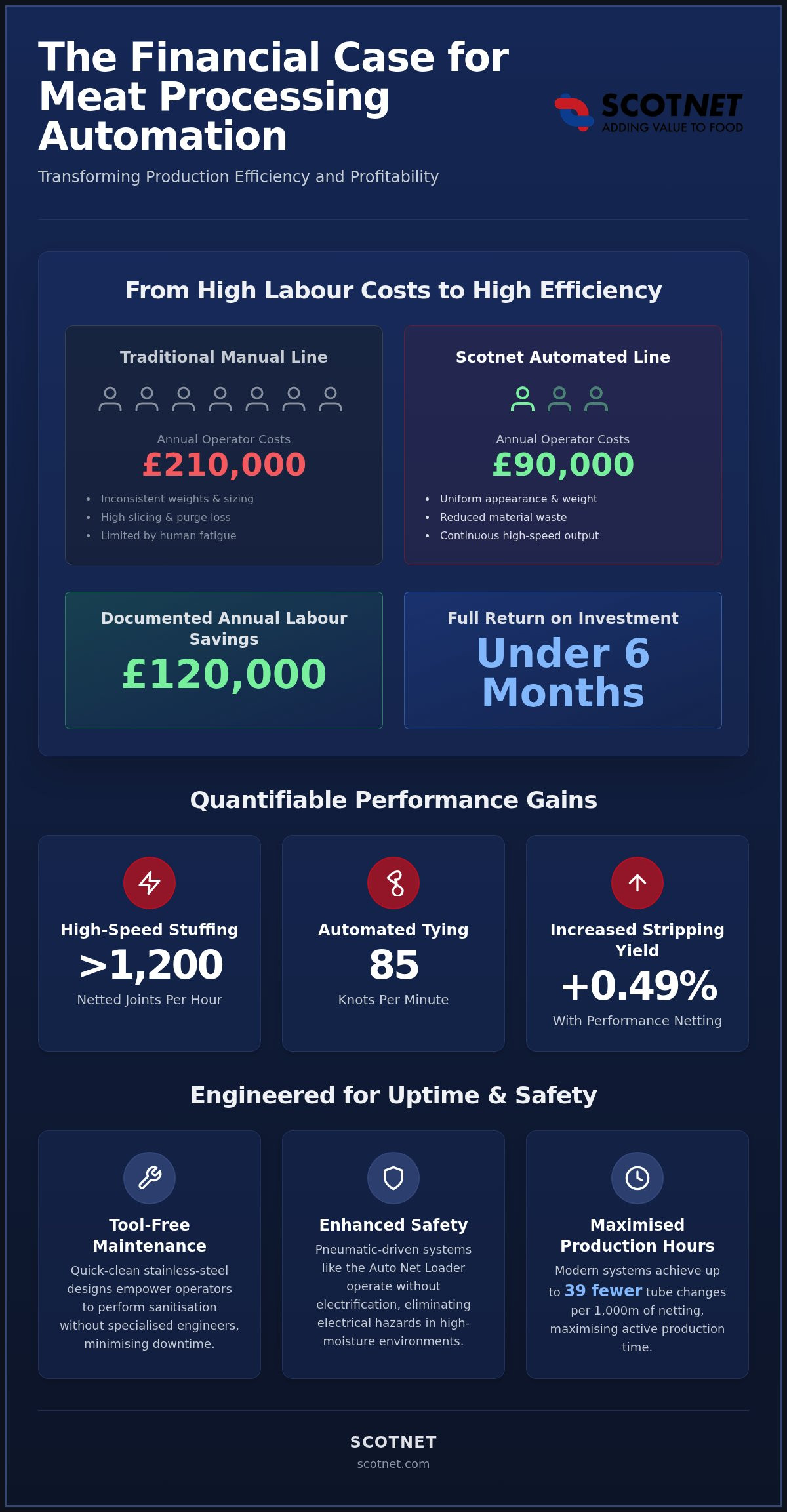
- Understand how integrating advanced meat processing automation equipment can reduce operator requirements from seven to as few as one, delivering a full return on investment in under six months.
- Identify the technical specifications of high-speed systems that stuff over 1,200 netted joints per hour.
- Learn how quick-clean stainless-steel designs and tool-free maintenance protocols eliminate the need for specialised engineers and significantly reduce operational downtime.
The Strategic Role of Meat Processing Automation Equipment
Consistency is a primary driver of profit. Automation eliminates human error in joint forming and netting application, ensuring uniform appearance. Additionally, automated machinery supports stringent hygiene standards. Stainless-steel, quick-clean designs facilitate international food safety compliance by minimising manual contact and simplifying sanitisation protocols.
Quantifying the Financial Impact and ROI
The 'Smarter Profits' framework demonstrates clear fiscal advantages. By transitioning from manual handling to automated lines, a facility can reduce annual operator costs from £210,000 to approximately £90,000, based on an average wage of £30,000. The ROI timeline for high-speed double stuffers is typically achieved in under six months. While manual throughput is limited by human fatigue and variability, automated systems maintain a consistent output of >1200 netted joints per hour. This measurable efficiency gain supports long-term operational stability.
Core Components of an Automated Meat Processing Line
High-efficiency meat processing automation equipment relies on the seamless integration of mechanical components to maintain industrial throughput. Automated stuffing represents the primary stage of this workflow. High-speed double stuffers facilitate continuous production cycles by eliminating the downtime typically associated with manual reloading. These units ensure that the meat processing automation equipment operates at peak capacity without the interruptions inherent in manual batch processing.
Optimising Maintenance and Operational Continuity
Industrial efficiency in high-output facilities depends on the reliability of meat processing automation equipment. The shift to tool-free maintenance protocols lets operators sanitise without waiting for specialised engineering teams. Quick-clean stainless-steel designs are now the industry standard for minimising line downtime and ensuring rigorous hygiene compliance.
System safety in high-moisture areas remains a primary concern for plant managers. Unlike conventional machinery, the Auto Net Loader utilises a pneumatic system with no electrification. This reliance on compressed air eliminates electrical hazards and simplifies the overall maintenance profile. On larger machines, cloud-based diagnostics now track performance, providing real-time data for issue resolution. Operational continuity is also improved by technical refinements in netting application. Modern systems achieve up to 30 fewer tube changes per 1,000m of netting, which maximises active production hours. Efficiency doesn't happen by accident; it's engineered into the workflow.
Frequently Asked Questions
What is the typical ROI for meat processing automation equipment?
High-speed meat processing automation equipment typically delivers a full return on investment in under six months for double-stuffer configurations. For single-stuffer systems, this timeline is usually achieved in under 12 months. These rapid returns are documented through significant reductions in annual operator costs, often moving from £210,000 for manual lines to £90,000 for automated DS1200 series setups.
How many operators are required for a fully automated netting system?
A fully automated netting system, such as the DS1200AC3 Autocut, requires only one operator to maintain production. This is a significant reduction from manual configurations, which typically necessitate seven personnel. By centralising the workflow, a single staff member can manage the stuffing and netting process while achieving a consistent output exceeding 1,200 joints per hour.
Article by
Gordon Wicklow
Gordon Wicklow is Managing Director of the Scobie & Junor Group, a family-owned Scottish business that has served the food and meat-processing industry for more than a century. A graduate of the University of St Andrews, Gordon has been a director of Scobie & Junor since 1998.
He leads the Group’s work across the UK and Ireland, helping food manufacturers add value through innovative ingredients, specialist packaging, elastic meat netting and automated processing machinery. Drawing on extensive industry experience and technical knowledge, Gordon champions practical innovation, operational efficiency and close customer collaboration—from developing new flavours and formulations to improving production yields, presentation and consistency.
Under his leadership, Scobie & Junor continues to combine more than 100 years of experience with modern manufacturing, new-product development and market insight, providing food processors and butchers with solutions designed for today’s evolving consumer and production demands.