ELASTIC NETTING
 AUTOMATION
 BONE PROTECTION
The True Cost of Vacuum Pack Leakers: An Industrial Prevention Guide
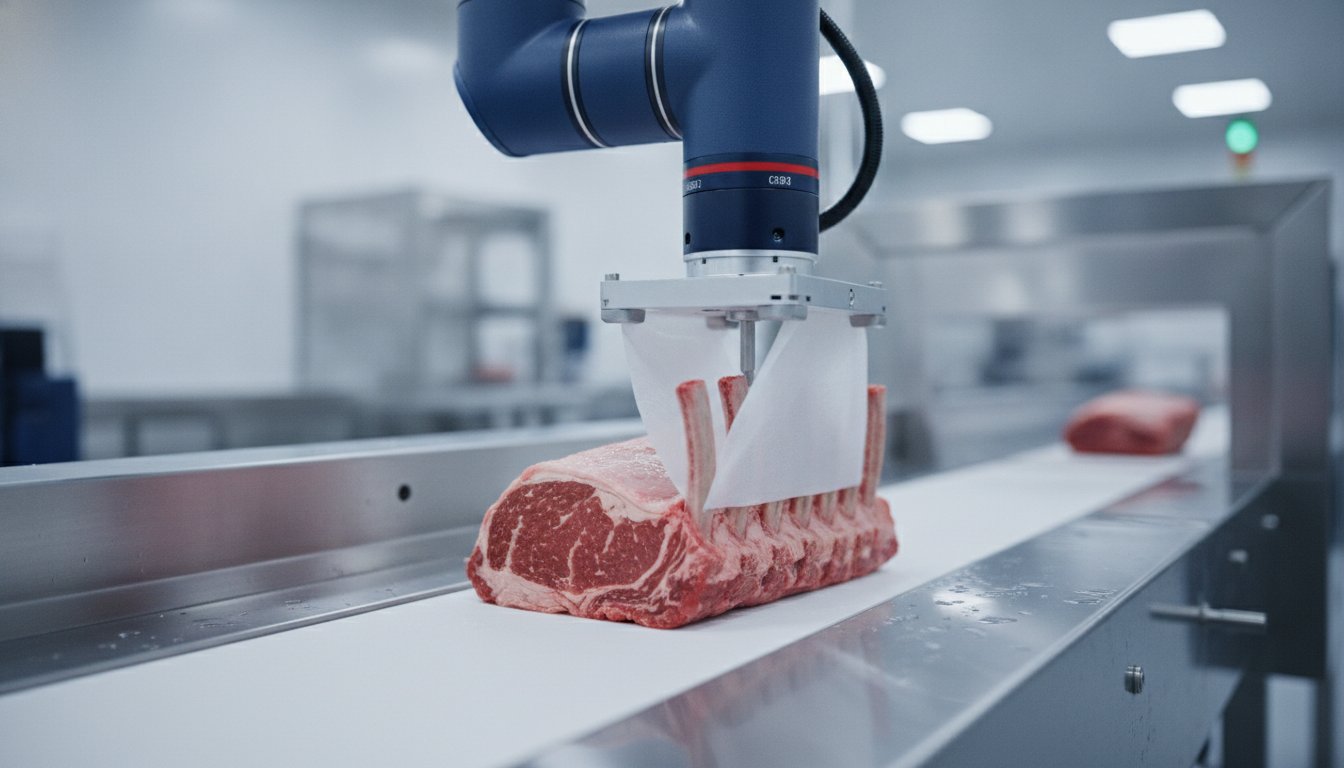
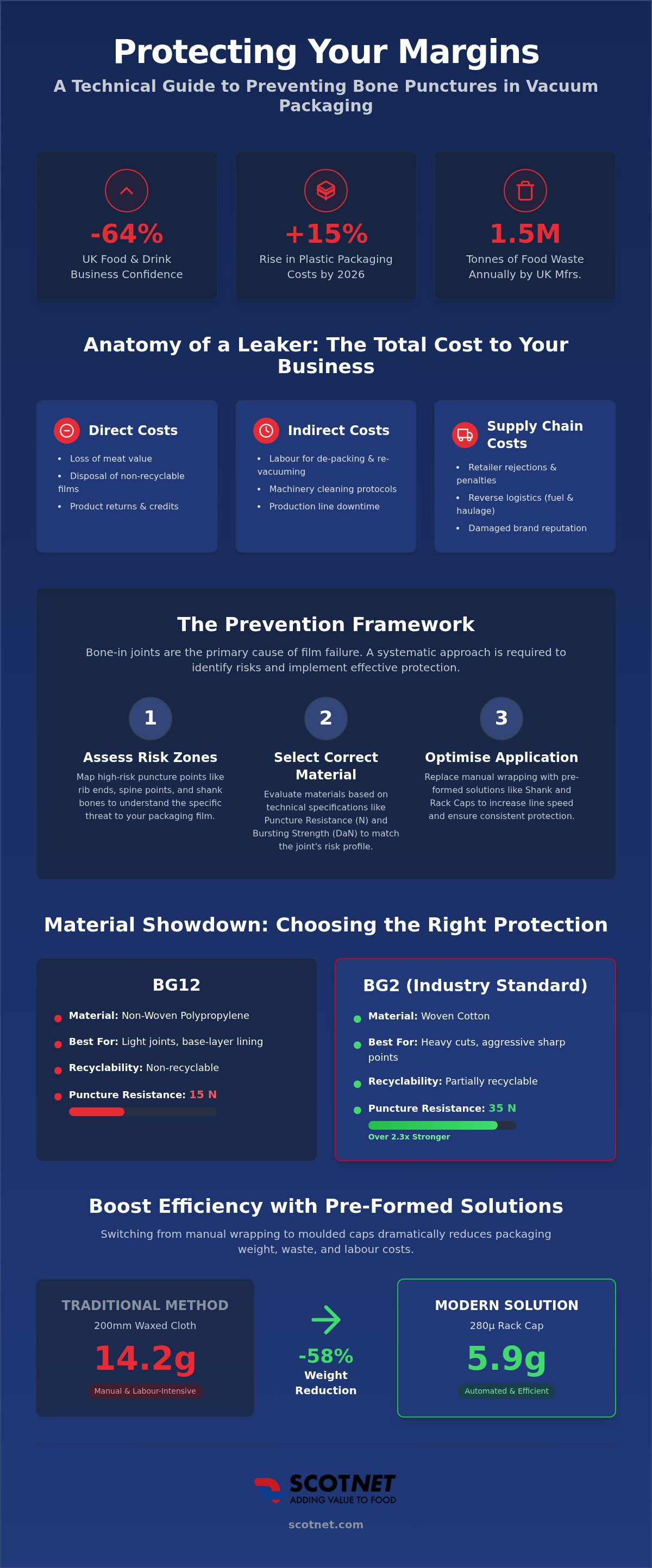
With UK food and drink business confidence at -64% and plastic packaging costs rising by up to 15% in early 2026, every failed seal is an unsustainable drain on your bottom line. The true cost of vacuum pack leakers extends far beyond the loss of a single product; it includes wasted labour, transport, and the 1.5 million tonnes of food waste UK manufacturers generate annually.
You're likely aware that bone-in joints are the primary culprits for failure, leading to expensive product returns and excessive waste. This guide shows how to quantify these financial losses and implement technical bone-puncture prevention strategies to protect your margins. We'll examine how transitioning from traditional materials to precision-engineered solutions like thermoformed bone protection can reduce packaging weight by 58% while maintaining the high safety standards your operation requires.
Key Takeaways
- Quantify the total cost of vacuum pack leakers by identifying immediate meat value loss and the indirect labour costs associated with de-packing and re-vacuuming.
- Map high-risk puncture zones, including rib ends and spine points, to select materials with the appropriate Puncture Resistance (N) and Bursting Strength (DaN) specifications.
- Replace manual wrapping processes with pre-formed Shank Caps and Rack Caps to eliminate labour-intensive steps and increase operational efficiency.
- Lower packaging weight by up to 58% and reduce waste by transitioning from traditional wax-impregnated cloths to modern bone protection solutions.
Analysing the Real Cost of Vacuum Pack Leakers in Food Processing
The financial burden of packaging failure is often underestimated in high-volume meat processing. Calculating the true cost of vacuum pack leakers requires a detailed audit of both immediate material losses and cumulative operational inefficiencies. During the vacuum packing process, a single bone puncture renders the primary product unsellable in its original format. This triggers a cycle of direct costs, including lost meat value and the disposal of non-recyclable films.
Indirect costs are frequently more damaging to the bottom line. These include:
- Specialised labour required to de-pack, sanitise, and re-vacuum failed units.
- Specialised cleaning protocols for machinery contaminated by leaked juices.
- Production downtime caused by manual interventions on high-speed automated lines.
Beyond the factory floor, leakers incur severe supply chain penalties. Retailer rejections and damaged brand reputation lead to lost contracts and financial credits. There's also a significant sustainability tax. Disposing of 1.4 tonnes of wasted material per 100,000 packs creates an environmental and financial liability that modern processors can't ignore.
Quantifying Margin Erosion from Packaging Failures
A leaker rate of just 1% can significantly erode annual profitability, increasing the overall cost of vacuum pack leakers in high-throughput lines. This figure accounts for the initial production cost and the hidden expense of reverse logistics. Transporting returned products that have lost their vacuum seal adds unnecessary fuel and haulage costs to an already compromised margin. Efficiency depends on preventing punctures at the source rather than managing failure after it reaches the customer.
How to Prevent Bone Punctures: A Technical Selection Guide
Systematic prevention is the only reliable way to reduce the cost of vacuum pack leakers. Processors must first conduct a risk assessment to identify high-risk zones, specifically rib ends, spine points, and shank bones.
Matching the protection format to the specific joint is critical for operational efficiency. While flat sheets offer versatility, pre-formed solutions like shank caps provide targeted protection for protruding bones. Any mismatch in material thickness or flexibility can lead to line downtime, negating the savings gained from puncture prevention. Maintaining a secure seal is also vital to mitigate food safety concerns associated with bacterial growth in compromised packaging.
Optimising Efficiency with Pre-formed Bone Protection Solutions
Transitioning from traditional wax-impregnated cloths to modern moulded caps significantly improves line efficiency. Manual wrapping remains a persistent bottleneck in high-throughput facilities. With Shank Caps and Rack Caps, processors eliminate the labour-intensive steps needed to secure loose protection materials. This reduction in manual handling directly lowers the total cost of vacuum pack leakers by ensuring consistent application and preventing human error during packing.
Sustainability gains are equally measurable. Switching from a 200mm waxed cloth to a 280µ Rack Cap reduces packaging weight by 58%. In practical terms, this moves the protection weight from 14.2g down to 5.9g per joint. To maintain peak performance, dedicated dispensers can be positioned at the packing station. These units facilitate rapid retrieval and application, ensuring that bone protection keeps pace with automated vacuum systems without causing mechanical obstructions.
Material Savings and Sustainability Benchmarks
The environmental impact of packaging failure is a growing concern for UK processors facing rising plastic taxes. Optimised protection solutions reduce waste by 1.4 tonnes per 100,000 packs, which is vital for meeting corporate ESG targets. Accurate reporting requires distinguishing between material types; Rack Caps are fully recyclable, whereas BG2 woven cotton sheets are not. Implementing these technical solutions mitigates the cost of vacuum pack leakers while aligning production with modern sustainability benchmarks and international compliance standards.
Securing Operational Margins through Advanced Bone Protection
Mitigating the total cost of vacuum pack leakers requires a transition from reactive re-packing to proactive technical prevention. These solutions don't just protect the product; they stabilise the production line by reducing the labour-intensive rework associated with failed joints.
Adopting pre-formed caps reduces packaging weight by 58% and saves 1.4 tonnes of waste per 100,000 packs. These measurable efficiency gains are essential to maintain profitability and meet sustainability benchmarks. Protect your product and your profits with Scotnet Bone Protection solutions. Moving to these industrial standards helps keep your facility competitive, safe, and efficient long-term.
Frequently Asked Questions
What are the primary causes of vacuum pack leakers in meat processing?
The primary causes of vacuum pack leakers include sharp bone protrusions from rib ends, spine points, and shanks puncturing the film during the vacuum cycle. Mechanical abrasion during transport and contamination of the seal area by fat or protein also contribute to failure rates. These punctures directly increase the cost of vacuum pack leakers by necessitating product returns and labour-intensive re-packing.
How much can bone protection reduce packaging waste in an industrial setting?
Industrial bone protection solutions significantly reduce environmental impact by lowering packaging weight by up to 58%. For example, switching from 200mm waxed cloths to 280µ Rack Caps reduces protection weight from 14.2g to 5.9g per unit. This transition allows processors to reduce waste by 1.4 tonnes per 100,000 packs, supporting corporate sustainability goals and ESG reporting requirements.
Article by
Gordon Wicklow
Gordon Wicklow is Managing Director of the Scobie & Junor Group, a family-owned Scottish business that has served the food and meat-processing industry for more than a century. A graduate of the University of St Andrews, Gordon has been a director of Scobie & Junor since 1998.
He leads the Group’s work across the UK and Ireland, helping food manufacturers add value through innovative ingredients, specialist packaging, elastic meat netting and automated processing machinery. Drawing on extensive industry experience and technical knowledge, Gordon champions practical innovation, operational efficiency and close customer collaboration—from developing new flavours and formulations to improving production yields, presentation and consistency.
Under his leadership, Scobie & Junor continues to combine more than 100 years of experience with modern manufacturing, new-product development and market insight, providing food processors and butchers with solutions designed for today’s evolving consumer and production demands.