ELASTIC NETTING
 AUTOMATION
 BONE PROTECTION
Lamb Bone Protection: Vacuum Packaging Solutions
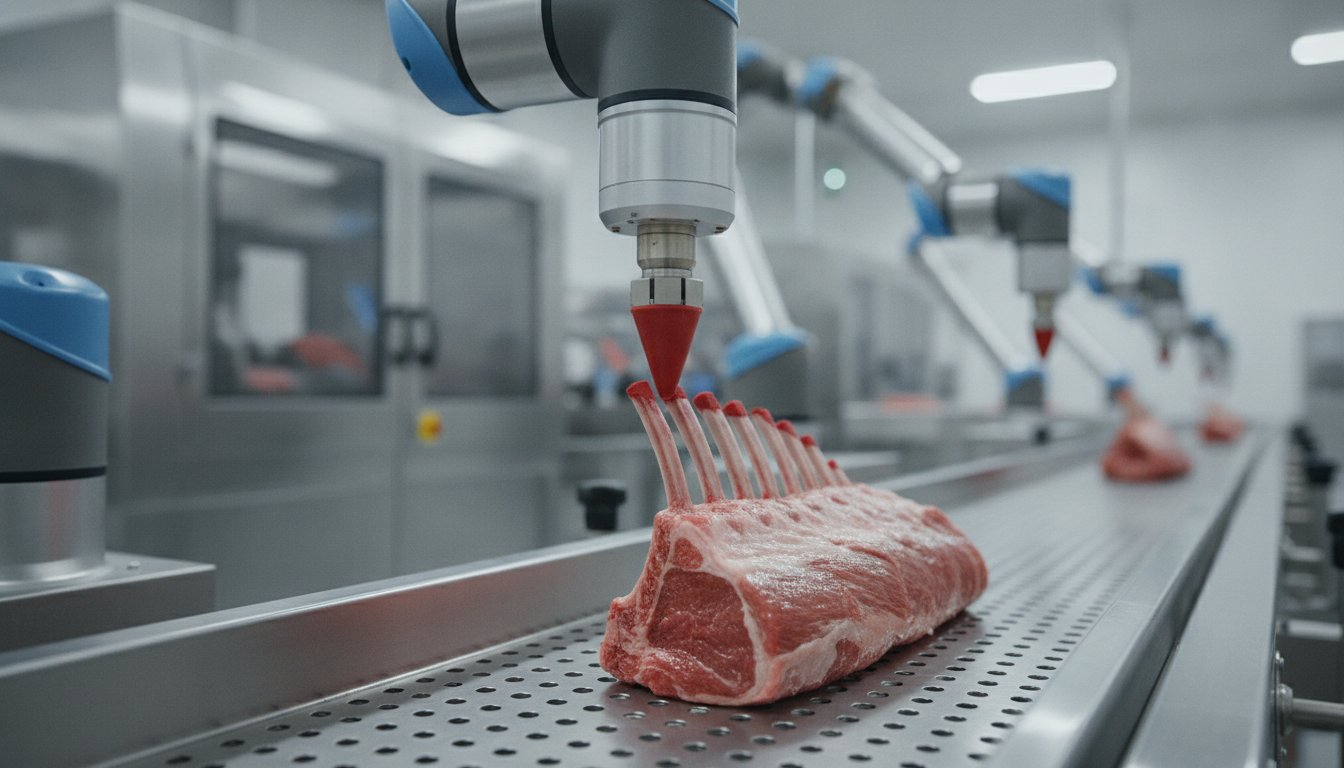
Switching from traditional waxed cloth to modern pre-formed rack caps can reduce your packaging weight by 58%. High rates of vacuum pack leaks in lamb shanks and rib ends drive up operational costs. This's a persistent challenge for processors who must balance puncture resistance with mandatory UK Extended Producer Responsibility (EPR) regulations on non-recyclable waste and material-weight targets.
This article explains how industrial protection solutions eliminate transit punctures while significantly lowering packaging waste. We will detail the technical performance of BG2 woven materials and pre-formed caps, demonstrating how these products reduce waste by up to 1.4 tonnes per 100,000 packs. By standardising protection for specific lamb cuts, your operation can achieve higher margins and improved environmental compliance through technical precision and material efficiency.
Key Takeaways
- Identify high-risk zones on lamb joints, such as rib ends and shank ends, to implement targeted bone protection and maintain vacuum-seal integrity.
- Evaluate the technical advantages of pre-formed caps to improve application consistency and increase packaging speed across industrial production lines.
- Mitigate the financial risks associated with vacuum-pack 'leakers' by utilising industrial-grade barriers designed to withstand high puncture pressures.
- Support environmental compliance and waste reduction targets by transitioning from traditional waxed cloth to modern, recyclable protection materials.
The Role of Bone Protection in Lamb Processing and Packaging
Bone protection serves as a critical physical barrier between sharp bone points and the film's integrity during vacuum packing. In industrial lamb processing, maintaining this seal is vital for shelf-life and food safety. Effective bone protection for lamb prevents physical punctures that allow oxygen ingress, which would otherwise lead to rapid product degradation.
Financial losses from 'leakers' are significant in high-volume operations. Every punctured pack incurs the cost of product spoilage, additional labour for re-packaging, and wasted primary film. This avoidable expense directly impacts profit margins. While traditional wax-impregnated cloths were once the industry standard, they often add unnecessary weight and aren't easily recyclable. Modern thermoformed PE material offers a more efficient alternative, providing high durability with less material.
Lamb joints present unique challenges due to the specific profiles of rib ends and shanks. These sharp, protruding points require targeted coverage, such as shank caps, to ensure safety during transit and handling. Standardising protection for these specific cuts helps processors maintain consistent quality across all production batches.
Pre-formed Rack Caps and Shank Caps for Lamb
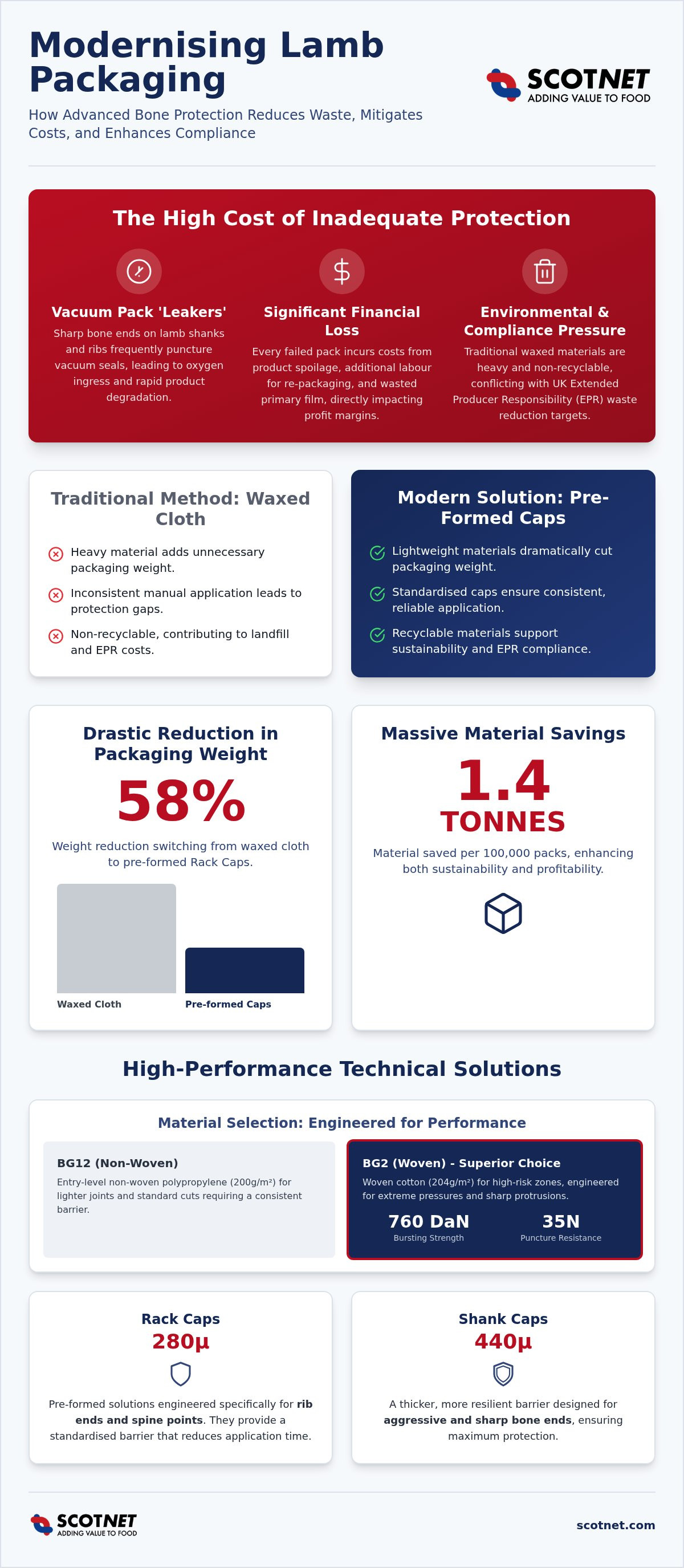
Rack Caps are 280µ and 440µ pre-formed solutions engineered specifically for rib ends and shank ends. For more aggressive bone ends, Shank Caps (440µ) offer a thicker, more resilient barrier. These pre-formed options ensure bone protection for lamb is applied with uniform precision across every unit, regardless of operator experience.
Sustainability and Operational Efficiency in Lamb Packaging
Adopting advanced bone protection for lamb provides measurable environmental benefits alongside significant cost savings. Technical data confirms that transitioning from traditional wax-impregnated cloth to pre-formed Rack Caps reduces material weight by 58%. For an industrial production run of 100,000 packs, this weight reduction saves 1.4 tonnes of material. Unlike traditional waxed materials, which are non-recyclable and contribute to landfill waste, modern pre-formed caps are recyclable. This shift supports corporate sustainability targets and helps processors comply with UK Extended Producer Responsibility (EPR) regulations. Detailed technical specifications are available in our bone protection packaging guide for further industrial context.
Protect your product and your profits with Scotnet Bone Protection. We look forward to supporting your operational goals with precision-engineered solutions.
Frequently Asked Questions
Why is bone protection necessary for lamb vacuum packaging?
Bone protection for lamb is essential to maintain the integrity of the vacuum seal by acting as a physical barrier against sharp bone points. Without this protection, rib ends and shanks frequently puncture the primary film, resulting in 'leakers'. These punctures cause rapid product spoilage and higher re-packaging costs, directly affecting the profitability of high-volume processing operations.
Can bone protection materials be recycled?
Recyclability depends on the specific product and material composition. Pre-formed Rack Caps and Shank Caps are fully recyclable, offering a sustainable alternative to traditional materials. In contrast, BG12 non-woven sheets and BG2 woven cotton sheets are not recyclable. Transitioning to pre-formed caps helps processors meet environmental targets by reducing non-recyclable waste by over 50%.
How do Rack Caps reduce packaging waste in lamb processing?
Rack Caps reduce packaging waste by significantly lowering the material weight required for each joint. Switching from traditional 200mm waxed cloth to a 280µ Rack Cap reduces protection weight from 14.2g to 5.9g, a 58% reduction. For a production run of 100,000 packs, this technical shift reduces total waste by 1.4 tonnes.
Article by
Gordon Wicklow
Gordon Wicklow is Managing Director of the Scobie & Junor Group, a family-owned Scottish business that has served the food and meat-processing industry for more than a century. A graduate of the University of St Andrews, Gordon has been a director of Scobie & Junor since 1998.
He leads the Group’s work across the UK and Ireland, helping food manufacturers add value through innovative ingredients, specialist packaging, elastic meat netting and automated processing machinery. Drawing on extensive industry experience and technical knowledge, Gordon champions practical innovation, operational efficiency and close customer collaboration—from developing new flavours and formulations to improving production yields, presentation and consistency.
Under his leadership, Scobie & Junor continues to combine more than 100 years of experience with modern manufacturing, new-product development and market insight, providing food processors and butchers with solutions designed for today’s evolving consumer and production demands.